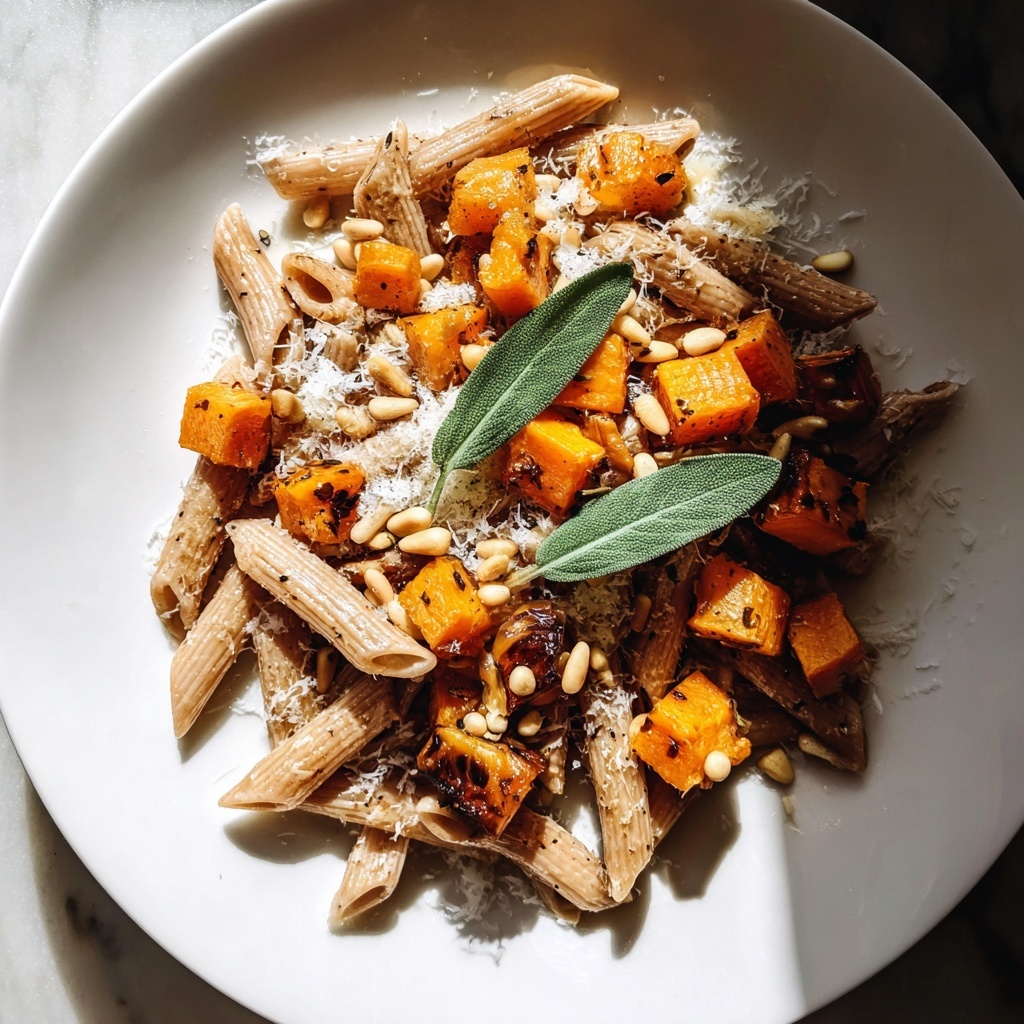
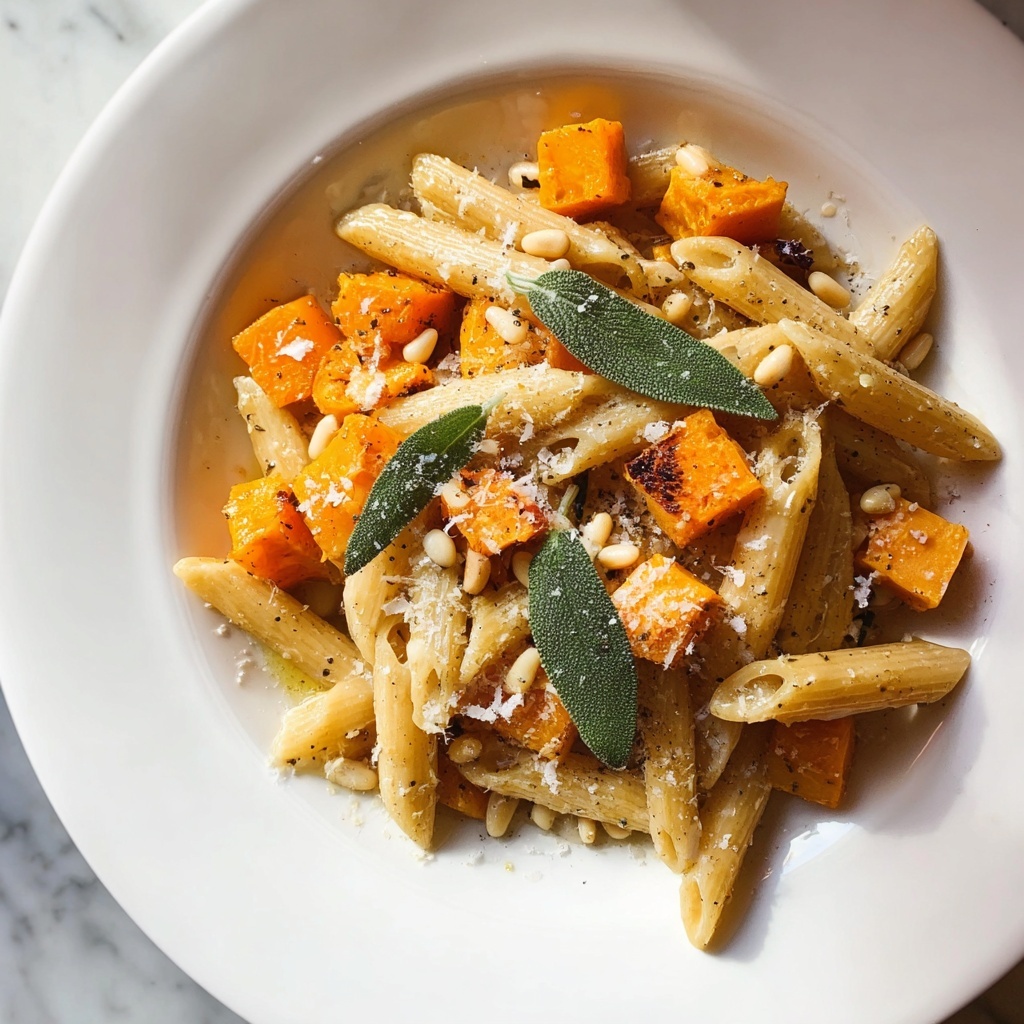
If you are craving a comforting dish that feels like a warm hug, this Butternut Squash Sage Pasta Recipe is exactly what you need. It combines the velvety sweetness of roasted butternut squash with the nutty richness of brown butter and the aromatic touch of fresh sage, all tossed with whole wheat pasta for added heartiness. This recipe is not only delicious but also beautifully simple and perfect for sharing with loved ones on a cozy evening.
Ingredients You’ll Need
Every ingredient here plays a starring role in creating a balanced dish filled with flavor, texture, and color. From the sweet, tender butternut squash to the fragrant sage and nutty Parmesan cheese, each one is essential for making this pasta truly shine.
- Butternut squash (1 medium, peeled and diced): The star of the dish, offering natural sweetness and creamy texture when roasted.
- Garlic (2 cloves, minced): Adds a subtle, aromatic punch that deepens the overall flavor.
- Whole wheat penne or fusilli pasta (12 ounces): Provides a wholesome, chewy base that absorbs the sauce beautifully.
- Unsalted butter (2 tablespoons): Essential for making the luscious brown butter sage sauce.
- Extra virgin olive oil (1 tablespoon): Helps roast the squash and blends perfectly with the butter.
- Fresh sage leaves (10 leaves, thinly sliced): Brings a fragrant earthiness that elevates the whole dish.
- Grated Parmesan cheese (1/4 cup plus extra for serving): Adds salty, nutty richness to the pasta.
- Toasted pine nuts (2 tablespoons, optional): Adds a delightful crunch and buttery flavor if desired.
- Salt (1/2 teaspoon plus extra for pasta water): Enhances all the flavors and balances sweetness.
- Freshly ground black pepper (1/4 teaspoon): Provides a gentle heat and depth.
How to Make Butternut Squash Sage Pasta Recipe
Step 1: Preheat and Prepare the Squash
Start by preheating your oven to 425°F and lining a baking sheet with parchment paper. This high heat is crucial for roasting the butternut squash cubes until they are golden brown and tender, which unlocks their natural sweetness and caramelized flavor.
Step 2: Roast Butternut Squash
Toss your diced squash with half a tablespoon of olive oil, salt, and pepper, ensuring each piece is coated. Spread them out on the baking sheet in a single layer to allow even roasting. Roast for 20 to 25 minutes, turning once halfway through, until the squash cubes are beautifully golden and soft—this step lays the flavorful foundation for your pasta.
Step 3: Cook Pasta
While the squash roasts, bring a large pot of salted water to a boil. Cook the whole wheat pasta until just al dente according to the package instructions. Be sure to reserve half a cup of the pasta water before draining, as this starchy liquid helps create the silky sauce that binds everything together.
Step 4: Prepare Brown Butter Sage Sauce
Heat a large skillet over medium heat and melt the butter along with the remaining olive oil. Add the sliced sage leaves and gently swirl the pan as the butter turns a rich golden brown and the sage crisps up. This fragrant, nutty sauce is what makes this Butternut Squash Sage Pasta Recipe so unforgettable.
Step 5: Add Garlic
Quickly stir in the minced garlic and cook for about 30 seconds until you can smell its inviting aroma. Be cautious not to burn it, as burnt garlic can turn bitter and overpower the delicate sauce.
Step 6: Combine Squash with Sauce
Now, fold the roasted butternut squash into the skillet, gently tossing to coat the cubes with the aromatic brown butter and crispy sage. This melds the flavors and lets the squash soak in the buttery goodness.
Step 7: Mix Pasta and Cheese
Add the drained pasta along with a quarter cup of the reserved pasta water to the skillet. Sprinkle the grated Parmesan cheese over everything and toss everything together until the sauce becomes a smooth, silky coating on the pasta. If needed, add a little more pasta water to reach your desired sauce consistency.
Step 8: Season and Serve
Finish by adjusting the seasoning with additional salt and freshly ground black pepper to enhance the flavors. Serve this beautiful Butternut Squash Sage Pasta Recipe immediately, topped with extra Parmesan, toasted pine nuts if using, and a few fresh sage leaves for an elegant touch.
How to Serve Butternut Squash Sage Pasta Recipe
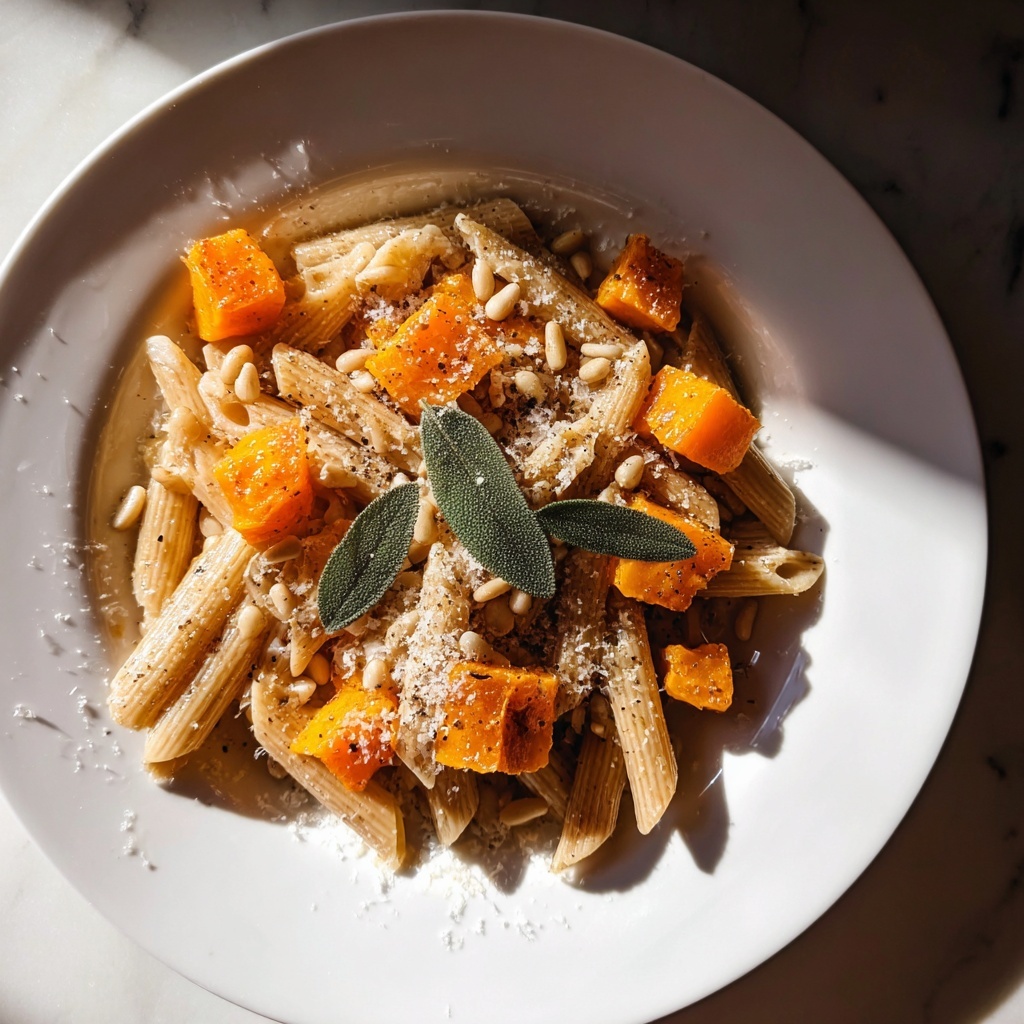
Garnishes
Sprinkle the pasta with extra grated Parmesan cheese and a handful of toasted pine nuts for a delightful crunch. Fresh sage leaves added on top not only brighten the presentation but also reinforce the herbal notes.
Side Dishes
This pasta pairs wonderfully with a crisp green salad dressed in lemon vinaigrette to cut through the richness, or some crusty garlic bread for an indulgent, cozy meal. Roasted Brussels sprouts or sautéed kale also complement the flavors beautifully.
Creative Ways to Present
For a fun twist at your next dinner party, serve the pasta in small, individual bowls with a sage leaf perched on top as a decorative accent. Drizzle a little extra brown butter sauce on the side of the plate for dipping or an added flavor boost.
Make Ahead and Storage
Storing Leftovers
Transfer leftover pasta to an airtight container and refrigerate for up to 3 days. The flavors deepen over time, so this dish tastes just as delightful the next day, making it a perfect make-ahead meal.
Freezing
While this pasta is best enjoyed fresh, you can freeze leftovers in a freezer-safe container for up to 1 month. To freeze, slightly undercook the pasta during the initial preparation to prevent it from becoming mushy when reheated.
Reheating
Reheat gently in a skillet over medium-low heat with a splash of water or broth to rehydrate the sauce. Avoid using high heat or the microwave alone, which can cause the sauce to separate or the squash to dry out.
FAQs
Can I use a different type of pasta for this Butternut Squash Sage Pasta Recipe?
Absolutely! While whole wheat penne or fusilli work beautifully, you can swap in your favorite pasta shape such as rigatoni, farfalle, or even gluten-free options if needed. Just adjust cooking times as necessary.
Is it okay to substitute fresh sage with dried sage?
Fresh sage provides a bright, crispy texture and fresh aroma that dried sage can’t replicate. However, if you only have dried sage, use it sparingly (about one-third the amount) and add it earlier in the cooking process to mellow its intensity.
Can this recipe be made vegan?
Yes! Simply replace the butter with vegan butter or olive oil and omit the Parmesan or use a plant-based cheese alternative. Toasted nuts can add extra flavor and texture to make up for the missing dairy richness.
What’s the best way to peel and dice a butternut squash?
Start by cutting off the ends, then use a sturdy vegetable peeler to remove the skin. Slice the squash in half lengthwise, scoop out the seeds, and cut into ½-inch cubes. Taking your time here makes cooking easier and safer.
Can I prepare the sauce and squash ahead of time?
You can roast the squash and make the brown butter sage sauce a day ahead. Store them separately in airtight containers in the refrigerator, then reheat gently and combine with freshly cooked pasta when ready to serve for optimal texture.
Final Thoughts
There is something truly magical about this Butternut Squash Sage Pasta Recipe that combines simplicity with layers of flavor. It’s one of those dishes that feels luxurious yet comforting, perfect for impressing guests or indulging on a quiet night in. I can’t wait for you to try it and discover how such humble ingredients come together to create something so special. Happy cooking!
Print
Butternut Squash Sage Pasta Recipe
- Prep Time: 10 minutes
- Cook Time: 35 minutes
- Total Time: 45 minutes
- Yield: 4 servings
- Category: Main Course
- Method: Roasting
- Cuisine: Italian
- Diet: Vegetarian
Description
A comforting and flavorful Butternut Squash Sage Pasta combining roasted butternut squash with a nutty brown butter sage sauce, whole wheat pasta, and a touch of Parmesan. This autumn-inspired dish is easy to prepare, hearty, and perfect for a cozy meal.
Ingredients
Squash and Roasting
- 1 medium butternut squash (approximately 2 pounds), peeled and diced into 1/2-inch cubes
- 1/2 tablespoon extra virgin olive oil
- 1/2 teaspoon salt
- 1/4 teaspoon freshly ground black pepper
Pasta
- 12 ounces whole wheat penne or fusilli pasta
- Salt for pasta water
Sauce and Garnish
- 2 tablespoons unsalted butter
- 1/2 tablespoon extra virgin olive oil
- 10 fresh sage leaves, thinly sliced
- 2 garlic cloves, minced
- 1/4 cup grated Parmesan cheese, plus extra for serving
- 2 tablespoons toasted pine nuts (optional)
- Freshly ground black pepper to taste
- Extra sage leaves (optional)
Instructions
- Preheat and Prepare Squash: Preheat your oven to 425°F (220°C) and line a baking sheet with parchment paper to prevent sticking and for easy cleanup.
- Roast Butternut Squash: Toss the diced butternut squash with 1/2 tablespoon of olive oil, 1/2 teaspoon salt, and 1/4 teaspoon black pepper. Spread the pieces evenly on the prepared baking sheet. Roast for 20 to 25 minutes, turning once halfway through until the squash is golden brown and tender.
- Cook Pasta: Bring a large pot of salted water to a boil. Add the whole wheat pasta and cook until just al dente according to the package instructions. Reserve 1/2 cup of the pasta cooking water and then drain the pasta.
- Prepare Brown Butter Sage Sauce: In a large skillet over medium heat, melt the butter along with the remaining 1/2 tablespoon of olive oil. Add the sliced sage leaves and swirl the pan, cooking until the butter turns golden brown and the sage crisps up, about 2 minutes.
- Add Garlic: Stir in the minced garlic and cook for 30 seconds until fragrant, being careful not to burn it.
- Combine Squash with Sauce: Add the roasted butternut squash to the skillet and gently toss to coat the cubes in the brown butter and crisp sage mixture.
- Mix Pasta and Cheese: Add the drained pasta and 1/4 cup of the reserved pasta water to the skillet. Sprinkle in the grated Parmesan cheese and toss everything together until well combined. Add more pasta water if needed to achieve a smooth sauce consistency.
- Season and Serve: Taste and adjust seasoning with additional salt and freshly ground black pepper as desired. Serve immediately topped with extra Parmesan, toasted pine nuts if using, and additional fresh sage leaves for garnish.
Notes
- Use whole wheat pasta for added fiber and a nuttier flavor.
- To toast pine nuts, place in a dry skillet over medium heat and stir frequently until golden and fragrant, about 3-4 minutes.
- If fresh sage is unavailable, dried sage can be used but reduce the amount to avoid overpowering the dish.
- Reserve pasta water as it helps to create a silky sauce that clings to the pasta.
- For a vegan version, substitute butter with a plant-based alternative and omit Parmesan or use a vegan cheese.