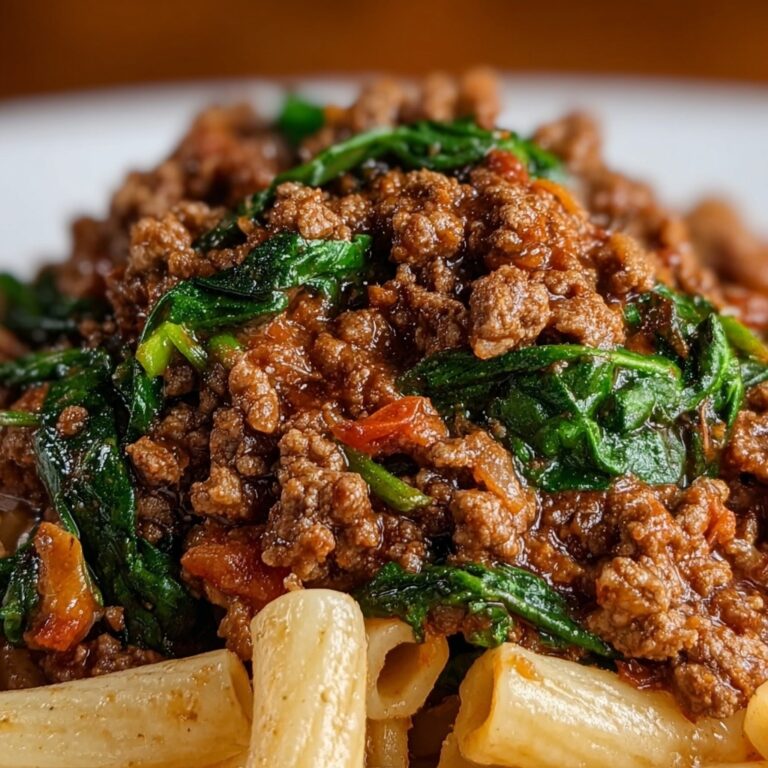
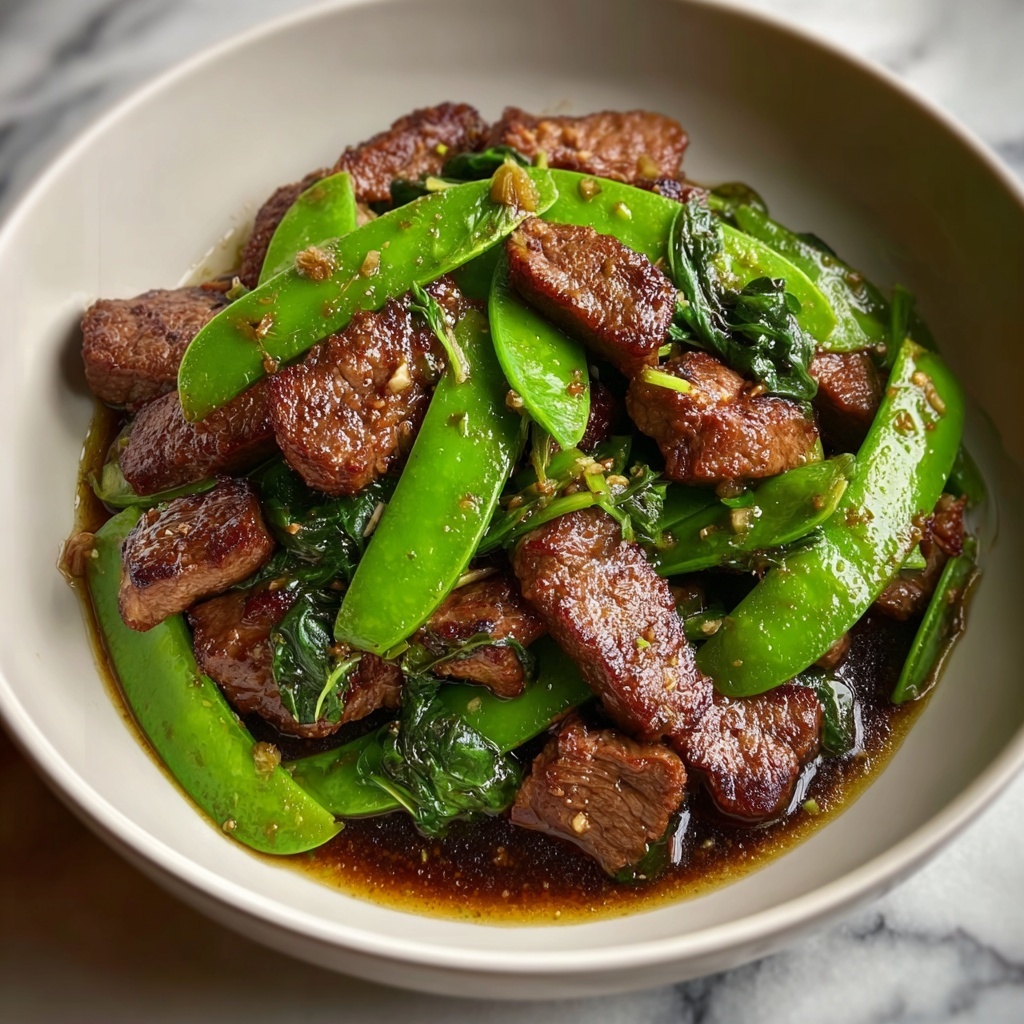
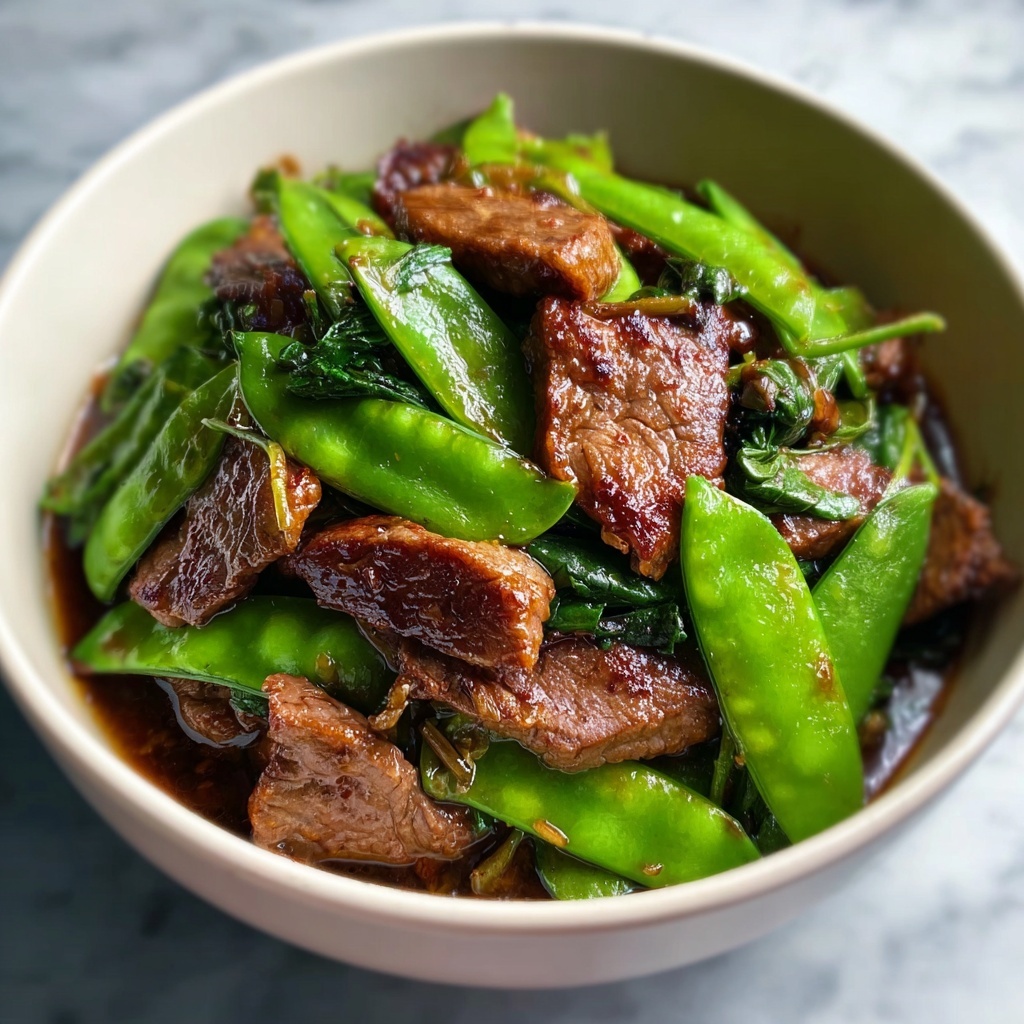
If you’re craving a dish that’s fresh, vibrant, and packed with flavor, the Asian Beef with Snow Peas Recipe is an absolute winner to have on your weeknight dinner rotation. This recipe brings together tender slices of beef with crisp, bright snow peas in a savory sauce that’s elevated by the perfect blend of garlic, ginger, and soy. It’s quick, easy, and the kind of meal that feels satisfying without any fuss—ideal for when you want something delicious but don’t want to spend all evening in the kitchen. Trust me, once you try this Asian Beef with Snow Peas Recipe, it’ll quickly become a favorite go-to that’s both comforting and exciting to eat!
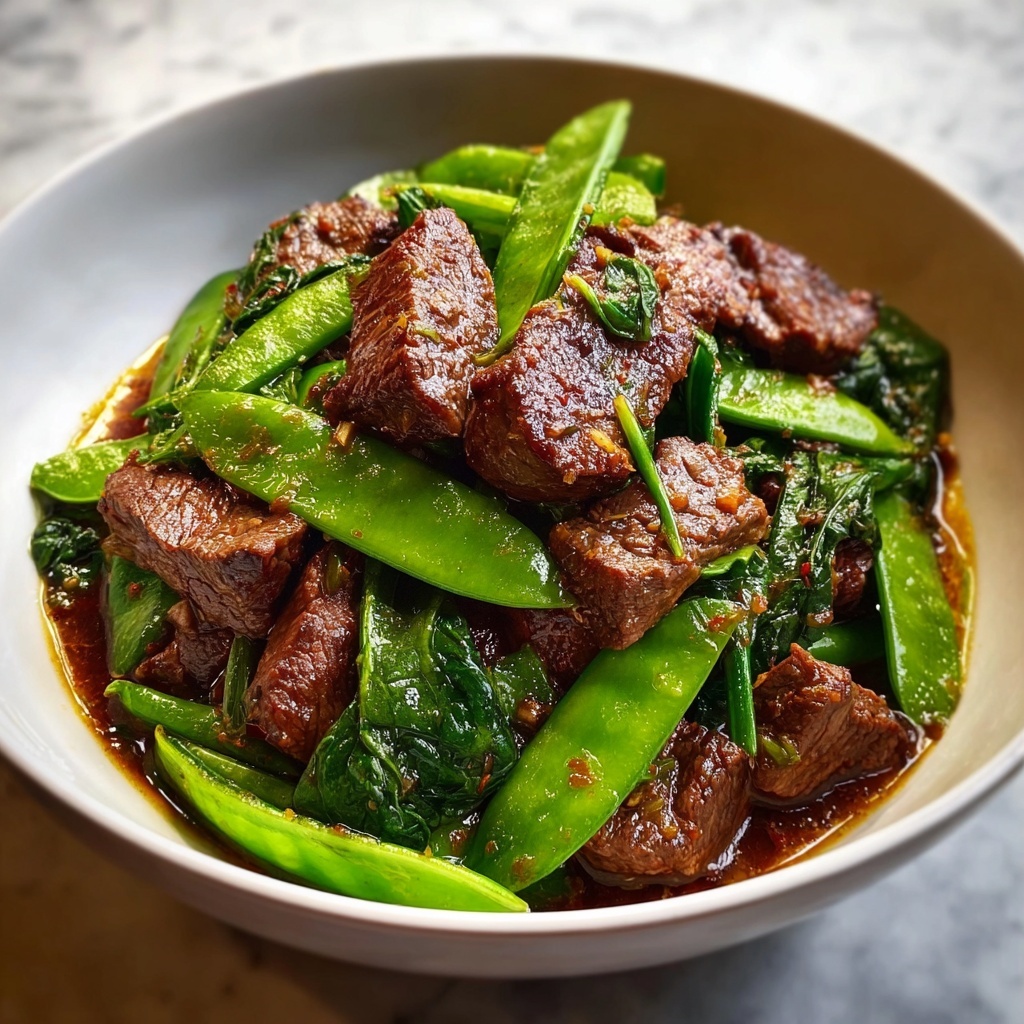
Ingredients You’ll Need
These ingredients are simple staples that pack a punch when combined. Each one plays a crucial role, from giving the beef that rich umami flavor to the snow peas adding a much-needed crunch and freshness. Together, they make this dish a balanced and colorful delight.
- 1 pound beef sirloin, sliced thinly: Thin slices cook quickly and remain tender for the perfect stir-fry texture.
- 2 cups snow peas: These add a crisp, sweet finish and vibrant green color, bringing freshness to the dish.
- 2 tablespoons soy sauce: Essential for that deep, salty umami base that flavors the beef beautifully.
- 1 tablespoon oyster sauce: Adds a subtle sweetness and complexity to the sauce that makes it irresistible.
- 1 tablespoon cornstarch: Helps create a smooth coating on the beef when combined with the marinade, locking in juices.
- 2 tablespoons vegetable oil: Provides a high smoke point ideal for a quick, hot stir-fry without burning.
- 2 cloves garlic, minced: Garlic brings aromatic depth and a slight bite to each mouthful.
- 1 teaspoon ginger, minced: Ginger adds brightness and a touch of warmth that perfectly complements the beef.
- Salt and pepper to taste: Simple seasonings to finish and balance the flavors perfectly.
How to Make Asian Beef with Snow Peas Recipe
Step 1: Marinate the Beef
Start by combining the soy sauce, oyster sauce, and cornstarch in a bowl and coating the thinly sliced beef sirloin. Letting the beef marinate for about 15 minutes allows the flavors to penetrate deeply while the cornstarch creates a velvety coating that helps keep the meat juicy during cooking.
Step 2: Heat the Oil
In a large pan or wok, heat the vegetable oil over medium-high heat. You want it hot enough to sizzle but not so hot that the oil smokes—this heat level is perfect for getting that delicious sear on the beef without overcooking.
Step 3: Sauté the Garlic and Ginger
Add the minced garlic and ginger to the pan and sauté for about a minute until fragrant. This step wakes up the dish with those wonderful aromas that stir up your appetite and layer flavor onto the beef.
Step 4: Cook the Beef
Now add the marinated beef to the pan. Stir-fry it continuously to brown the meat evenly and lock in the flavors. This should take just a few minutes until the beef is cooked through but still tender.
Step 5: Add the Snow Peas and Season
Toss in the snow peas and continue stir-frying for another 2 to 3 minutes. The peas should remain crisp-tender and bright green, giving your dish delightful texture. Finish by seasoning with salt and pepper to taste, adjusting for your preferred seasoning balance.
How to Serve Asian Beef with Snow Peas Recipe
Garnishes
For a simple yet elegant finish, try sprinkling chopped green onions or toasted sesame seeds over the dish. These add a pop of color and an extra layer of texture that makes the meal feel a bit more special.
Side Dishes
This dish shines served over steamed jasmine rice or alongside tender egg noodles to soak up that fantastic savory sauce. For a lighter option, a crisp Asian cucumber salad with a hint of sesame oil and rice vinegar pairs beautifully.
Creative Ways to Present
If you want to impress, serve the Asian Beef with Snow Peas Recipe family-style on a large platter garnished with fresh cilantro or sliced red chili for a touch of heat and color contrast. Alternatively, tuck the beef and peas inside lettuce cups for a fresh, handheld twist that’s perfect for sharing.
Make Ahead and Storage
Storing Leftovers
Store any leftovers in an airtight container in the refrigerator for up to 3 days. The beef may absorb more sauce as it sits, deepening the flavors, so the next meal can taste even better.
Freezing
While you can freeze the cooked beef and snow peas, be aware that the texture of the snow peas might become softer after thawing. It’s best to freeze the beef separately if you want to maintain the snap of fresh vegetables for later.
Reheating
Reheat gently in a skillet over medium heat to avoid overcooking the beef. Adding a splash of water or broth while reheating can help rehydrate the dish and keep the snow peas crisp-tender.
FAQs
Can I use a different cut of beef for this recipe?
Absolutely! While sirloin is tender and ideal for quick stir-frying, flank steak or ribeye sliced thinly can also work beautifully, just adjust cooking times accordingly to avoid toughness.
What can I substitute for oyster sauce?
If you don’t have oyster sauce, a mix of soy sauce with a bit of hoisin sauce or even mushroom sauce can provide a similar depth of flavor, though the taste profile will shift slightly.
Can I make this dish vegetarian?
Yes! Swap out the beef for firm tofu or even mushrooms like shiitake for a delicious vegetarian variation that still highlights the snow peas and those amazing aromatics.
Is cornstarch necessary in the marinade?
Cornstarch is key for that velvety coating on the beef, which locks in moisture and creates a pleasing texture. You can skip it, but the beef may not be as tender or saucy.
How long can I marinate the beef?
The 15 minutes in this recipe is ideal for quick flavor absorption, but you can marinate up to 2 hours in the fridge if you want to prep ahead and deepen the flavor even more.
Final Thoughts
This Asian Beef with Snow Peas Recipe is truly one of those dishes that delivers big on flavor without demanding a lot of time or complicated ingredients. It’s a wonderful choice when you want a home-cooked meal that feels special and satisfying yet comes together in under 30 minutes. Give it a try for your next dinner—you might just find yourself making it again and again!
Print
Asian Beef with Snow Peas Recipe
- Prep Time: 15 minutes
- Cook Time: 10 minutes
- Total Time: 25 minutes
- Yield: 4 servings
- Category: Main Course
- Method: Stovetop
- Cuisine: Asian
Description
This Asian Beef with Snow Peas recipe is a quick and flavorful stir-fry dish that combines tender beef sirloin with crisp snow peas, enhanced by a savory marinade and aromatic garlic and ginger. Perfect for a delicious weeknight meal, it pairs wonderfully with rice or noodles.
Ingredients
Beef Marinade
- 1 pound beef sirloin, sliced thinly
- 2 tablespoons soy sauce
- 1 tablespoon oyster sauce
- 1 tablespoon cornstarch
Vegetables & Aromatics
- 2 cups snow peas
- 2 cloves garlic, minced
- 1 teaspoon ginger, minced
Other
- 2 tablespoons vegetable oil
- Salt and pepper to taste
Instructions
- Marinate the beef: In a bowl, combine the thinly sliced beef sirloin with soy sauce, oyster sauce, and cornstarch. Mix well and let it marinate for 15 minutes to tenderize and absorb the flavors.
- Heat the oil: Place a pan over medium-high heat and add the vegetable oil, allowing it to become hot enough for sautéing.
- Sauté aromatics: Add the minced garlic and ginger to the hot oil, cooking for about 1 minute until fragrant but not burnt, releasing their flavors into the oil.
- Cook the beef: Add the marinated beef to the pan and stir-fry, continuously stirring, until the beef is browned and cooked through, about 3-5 minutes.
- Add snow peas and finish: Toss in the snow peas and stir-fry together with the beef for an additional 2-3 minutes until the peas are tender-crisp. Season with salt and pepper to taste, then remove from heat and serve hot over rice or noodles.
Notes
- Ensure the beef is sliced thinly against the grain for maximum tenderness.
- Do not overcook the snow peas to maintain their crisp texture.
- You can substitute oyster sauce with hoisin sauce for a different flavor profile.
- For a gluten-free version, use tamari instead of soy sauce.
- Serve immediately for the best texture and flavor.