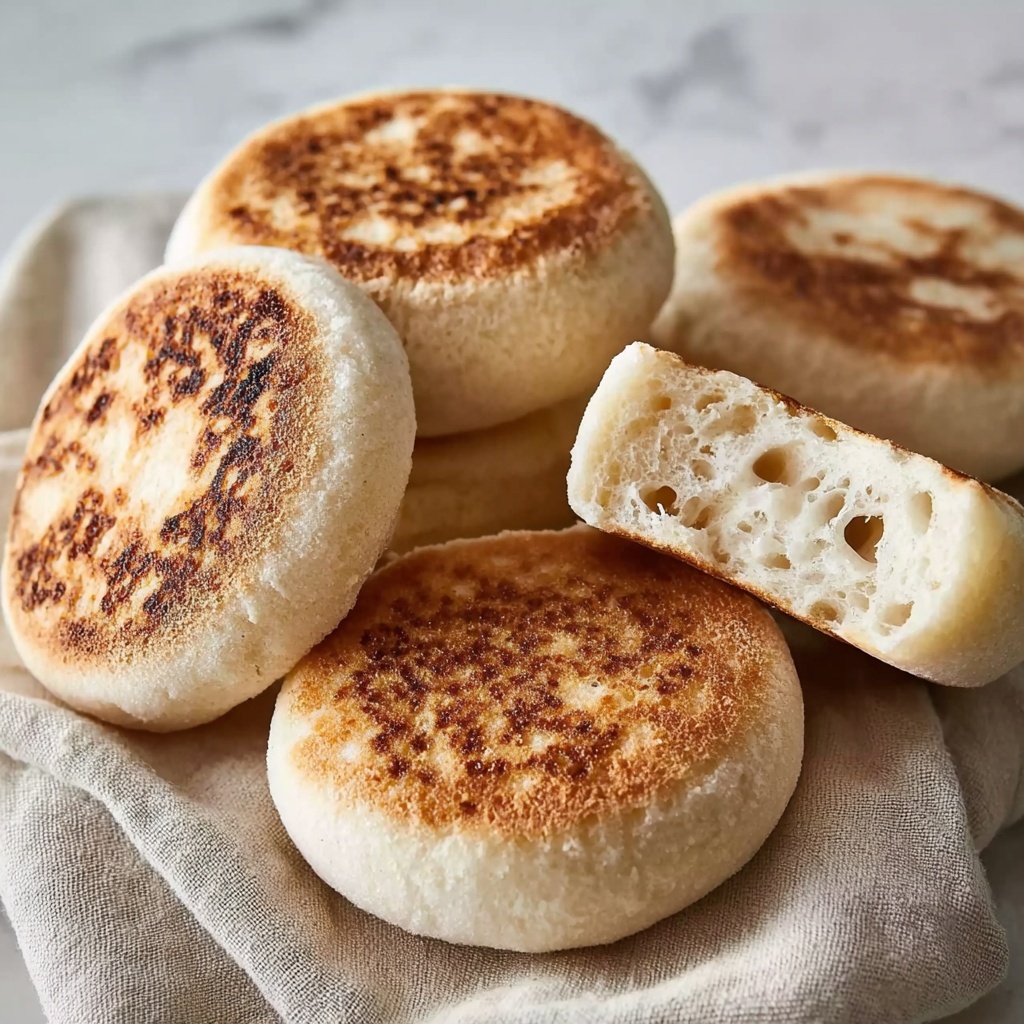
Oh, if you’ve ever wondered what to do with that extra sourdough discard sitting in your fridge, I have the perfect answer for you: this delightful Sourdough Discard English Muffins Recipe. It’s a total game-changer that transforms what might seem like waste into golden, fluffy, and flavorful muffins boasting those signature nooks and crannies you can’t resist. With a perfectly balanced tang and a tender crumb, these muffins will quickly become your weekend breakfast favorite or a charming addition to any brunch spread.
Ingredients You’ll Need
The magic of this recipe lies in its simple, everyday ingredients. Each one is thoughtfully chosen to build up that soft, chewy texture and bring out the lovely sourdough depth in every bite, while the proper dusting gives these muffins their characteristic crisp edges.
- Whole milk, 1 cup: Warmed to about 110°F to activate the yeast gently without killing it.
- Unsalted butter, 2 tablespoons: Melted for richness that keeps the muffins moist and tender.
- Brown sugar, 2 tablespoons: Adds a subtle sweetness and aids in the caramelization of the crust.
- Active dry yeast, 1 teaspoon: Gives extra lift and lightness alongside the sourdough discard.
- Sourdough discard, ½ cup: The star ingredient that injects lovely tang and texture.
- Bread flour, 2 ½ cups: High protein to create that chewy, elastic crumb English muffins are famous for.
- Kosher salt, 2 teaspoons: Balances the flavors perfectly and helps control the fermentation.
- Cornmeal or semolina flour: For dusting to prevent sticking and provide a crisp, rustic finish.
How to Make Sourdough Discard English Muffins Recipe
Step 1: Mixing the Dough
Start by warming your milk to about 110 degrees Fahrenheit—that cozy temperature your yeast loves. Mix the milk with melted butter, brown sugar, sourdough discard, and yeast in a large bowl, then let it rest for a few minutes. This lets the yeast wake up and get ready to work its magic. Next, add the bread flour and salt, and stir with a dough whisk or wooden spoon until a slightly sticky dough forms that’s well combined. It might feel a bit soft but don’t add extra flour; that stickiness is part of what makes these muffins so tender inside.
Step 2: Let the Dough Rise
Cover the bowl with a clean towel or plastic wrap and let the dough rise in a warm spot until it doubles in size—usually about 60 to 90 minutes. If you want to deepen the flavor, you can pop the covered dough into the fridge overnight instead. This slow fermentation builds complexity that you’ll notice in every tangy bite.
Step 3: Shape Your Muffins
Once your dough is ready, turn it out onto a floured surface. Press or roll it to about an inch thick, which is perfect for creating those thick, pillowy muffins. Use a biscuit cutter, drinking glass, or jar rim to cut circles. Don’t toss those scraps—they can be stacked, re-rolled, and cut again until all the dough is shaped. You’ll typically get 9 to 10 muffins, depending on size, but if you want more control, step 7 introduces a simpler approach to shaping.
Step 4: Second Rise on a Cornmeal Bed
Generously dust a baking sheet with cornmeal or semolina flour to prevent the dough from sticking and to add that signature crunch on the bottom. Place the muffin rounds on the pan and dust the tops with cornmeal as well. Cover and let them rise again until they’re puffy and light—about an hour at room temperature. If your dough was chilled in the fridge, this might take closer to two hours.
Step 5: Cook Your English Muffins
Preheat an electric skillet to 300°F or use a heavy skillet over medium-low heat. Place the risen muffins on the skillet with space to spare, cover, and cook for 5 minutes before flipping and cooking for another 5. Lower the heat to about 250°F if the muffins brown too quickly, flipping a few more times until the internal temperature hits around 195-200°F. You can also finish cooking in a 350°F oven for about 10 minutes, especially if they’re thicker. This gentle cooking ensures the muffins develop that lovely golden crust while cooking through evenly.
Step 6: Cool and Separate
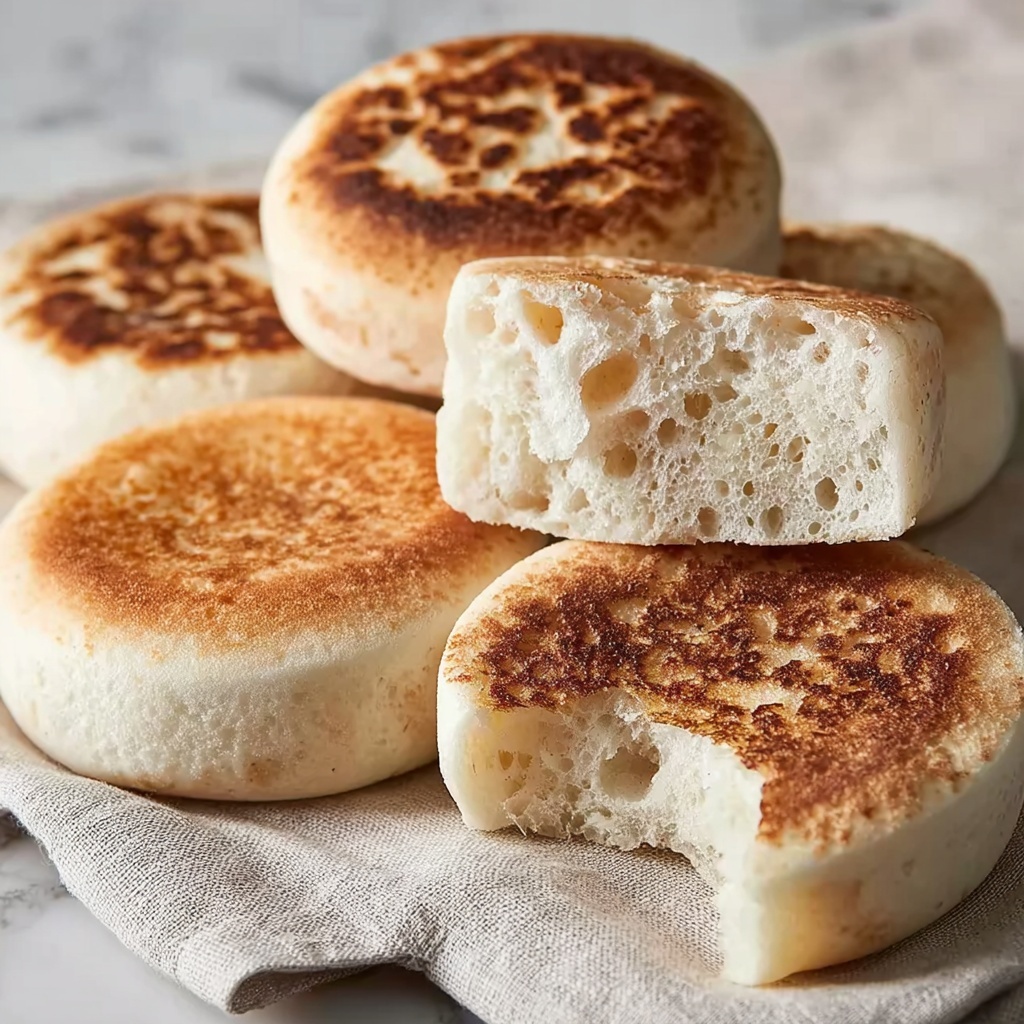
Once cooked, transfer the muffins to a cooling rack and let them cool to room temperature. The final secret for the most delightful English muffin experience is to pry the muffins apart with a fork and your fingers before toasting them. This teasing technique creates those luscious nooks and crannies that soak up melted butter and jam like nothing else.
Step 7: Alternative Shaping Method
If you prefer a simpler, no-fuss method to shape your muffins, divide the dough into 8 to 12 equal pieces, shape each into a ball, then gently press down into flat disks. This approach reduces any wasted dough and saves time while still producing irresistibly good muffins.
How to Serve Sourdough Discard English Muffins Recipe
Garnishes
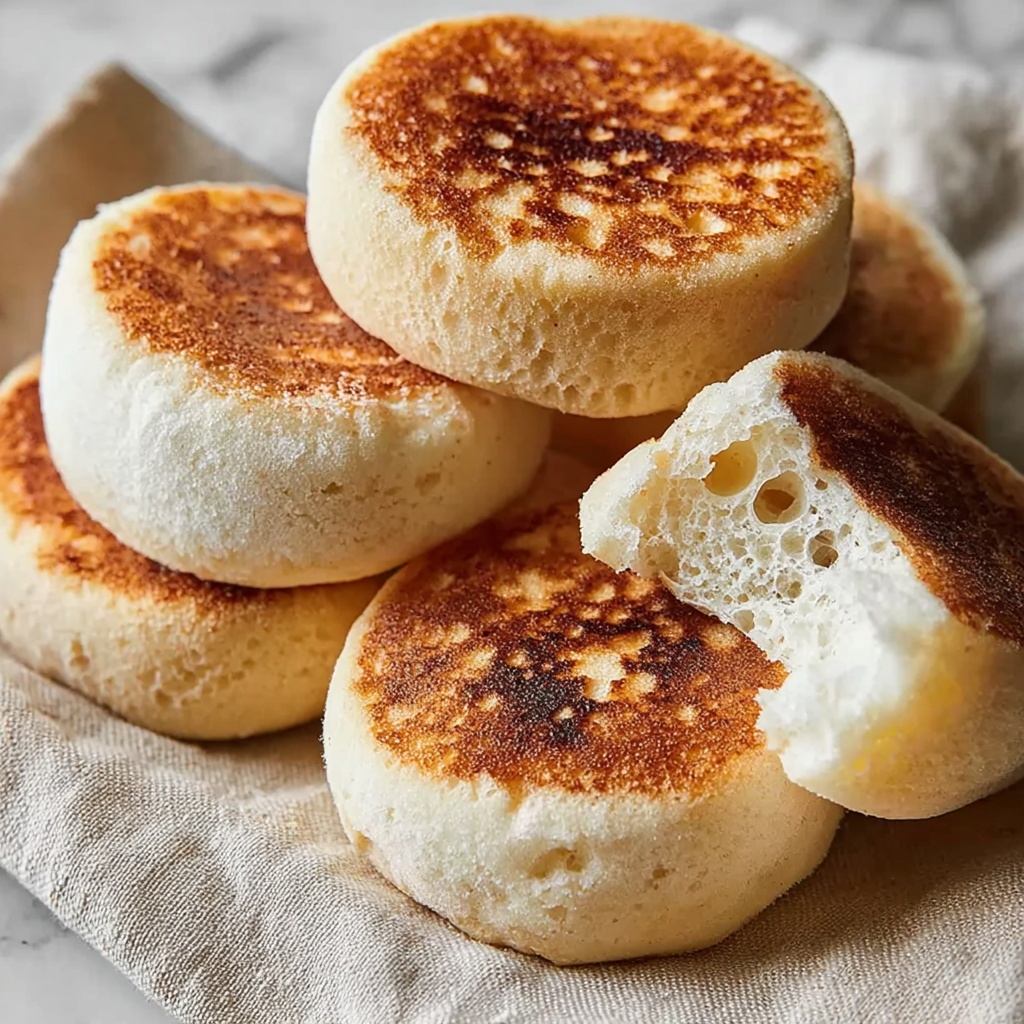
These muffins are a great blank canvas for fun and tasty garnishes. A generous pat of butter melting into those nooks and crannies is classic, or spread on fruit preserves, honey, or even a nut butter for extra indulgence. If you want to get fancy, a sprinkle of cinnamon sugar or a drizzle of maple syrup adds an irresistible sweet touch.
Side Dishes
Serve your English muffins alongside a colorful fresh fruit salad or crispy breakfast potatoes for a perfect balanced meal. They also pair beautifully with eggs cooked any way you like—think scrambled, poached, or a hearty omelet. For a savory twist, stack them with bacon, avocado, and tomato for a quick breakfast sandwich.
Creative Ways to Present
Toast half the muffin and layer with cream cheese, smoked salmon, and dill for an elegant appetizer. Or, go sweet and layer muffins with sliced bananas, peanut butter, and a drizzle of honey for a quick breakfast treat. You can also halve and freeze extras, then whip up mini pizzas using simple toppings whenever hunger strikes.
Make Ahead and Storage
Storing Leftovers
Once cooled, store your leftover Sourdough Discard English Muffins in an airtight container at room temperature for up to 2 days. For freshness beyond that, refrigeration is best but keep in mind they can dry out faster, so toasting is encouraged before eating.
Freezing
These muffins freeze wonderfully when wrapped tightly in plastic wrap and packed inside a freezer-safe bag. Freeze whole or sliced for up to 3 months. When you want a quick breakfast, just grab a couple from the freezer and toast straight from frozen or let thaw slightly first.
Reheating
For that freshly toasted crunch, split the English muffins and either toast them in a toaster or heat them in a skillet over medium heat. If frozen, you can toast directly or warm gently in the microwave for 15-20 seconds before crisping in the toaster if you want quicker results.
FAQs
Can I use sourdough starter instead of discard in this recipe?
You can, but sourdough discard is preferred here because it has less active yeast and bacteria, which makes the dough more predictable during the quick yeast rise. Using active starter might alter the texture and rise time.
What if I don’t have bread flour? Can I use all-purpose flour?
All-purpose flour works but you might end up with a slightly less chewy muffin. Bread flour’s higher protein content helps develop gluten, giving you that ideal texture. You could also try blending AP flour with a bit of vital wheat gluten for best results.
Why do you cook the muffins on the stovetop instead of baking only?
Cooking on the stovetop helps form those classic crisp, golden crusts on both sides without drying out the interior. Baking is often used as a final step to ensure they’re cooked through, but the stovetop method is what gives English muffins their trademark texture.
Can I skip the second rise?
The second rise is key for light, airy muffins with a tender crumb. Skipping it will result in denser muffins with fewer nooks and crannies, so it’s definitely worth the extra time.
How do I get the nooks and crannies that English muffins are famous for?
Careful dough handling, slow fermentation, and the fork-prying technique after cooling are essential. This recipe and method encourage the perfect texture so that when you split and toast them, those delightful pockets appear for you to fill with all your favorite toppings.
Final Thoughts
This Sourdough Discard English Muffins Recipe is a heartfelt way to turn your discard into something truly special and delicious. With its warm, inviting flavors and wonderfully textured crumb, this recipe promises to brighten your mornings and impress your family and friends. Give it a try—I promise these homemade muffins will quickly become a beloved staple in your kitchen!
Print
Sourdough Discard English Muffins Recipe
- Prep Time: 30 minutes
- Cook Time: 20 minutes
- Total Time: 1 hour 50 minutes to 2 hours 20 minutes (includes rising time; longer if refrigerated overnight)
- Yield: 8-12 English muffins
- Category: Breakfast
- Method: Stovetop
- Cuisine: American
- Diet: Vegetarian
Description
This Sourdough Discard English Muffins recipe transforms leftover sourdough discard into delicious, homemade English muffins with a delightfully chewy texture and characteristic nooks and crannies. Using a combination of warmed milk, melted butter, brown sugar, yeast, and bread flour, these muffins are cooked gently on the stovetop in a skillet, producing a perfect golden crust and soft interior. They are ideal for breakfast or brunch, providing a great way to reduce waste and enjoy fresh, fluffy muffins with a crisp outside.
Ingredients
Dough Ingredients
- 1 cup whole milk (240 grams), warmed to 110°F
- 2 tablespoons (28 grams or 1 ounce) unsalted butter, melted
- 2 tablespoons (30 grams) brown sugar (or sweetener of choice)
- 1 teaspoon (3 grams) active dry yeast
- ½ cup (140 grams) sourdough discard
- 2 ½ cups (300 grams) bread flour
- 2 teaspoons (6 grams) kosher salt
For Dusting
- Cornmeal or semolina flour
Instructions
- Prepare the dough: In a large mixing bowl, combine the warm milk, melted butter, sourdough discard, brown sugar, and active dry yeast. Let the mixture sit for a few minutes to activate the yeast. Then add the bread flour and kosher salt, mixing with a dough whisk or wooden spoon until a slightly sticky dough forms and is well combined.
- First rise: Cover the bowl and allow the dough to rise until it doubles in size, about 60 to 90 minutes. For enhanced flavor, you may refrigerate the dough overnight at this point, which will slow fermentation and develop complexity.
- Shape the muffins: Once risen or after chilling, transfer the dough onto a floured surface. Press or roll it out to approximately 1-inch thickness. Use a biscuit cutter or a glass to cut round muffins. Gather and re-roll scraps as needed. Typical yield is 9-10 muffins depending on thickness but can vary.
- Second rise: Place the shaped muffin rounds on a pan heavily dusted with cornmeal or semolina flour, dust both sides well. Cover and allow them to rise for about one hour until visibly puffy and light. If dough was chilled, this may take up to 2 hours.
- Cook the muffins: Preheat an electric skillet to 300°F or use a heavy skillet on medium-low heat. Place the risen muffins with some space between them. Cover and cook for 5 minutes. Flip and cook another 5 minutes covered. Reduce heat to about 250°F if needed, and continue flipping occasionally until the internal temperature registers 195-200°F. Optionally, finish cooking in a 350°F oven for about 10 minutes, depending on thickness.
- Cool and serve: Transfer the cooked muffins to a cooling rack to reach room temperature. To achieve the classic English muffin texture, separate the halves by prying them apart with a fork and fingers before toasting and serving.
- Alternate shaping method: Instead of rolling and cutting rounds, divide the dough into 8-12 equal pieces. Shape each piece into a ball and gently press the ball flat into a disk. This method produces minimal scraps and simplifies the shaping process.
Notes
- For deeper flavor development, refrigerate the dough overnight after the first rise.
- Use cornmeal or semolina flour generously to prevent sticking and add texture to the muffin bottoms.
- Monitor heat carefully when cooking on the stove to avoid burning; adjust temperature as needed.
- The muffins are best split open with a fork before toasting to highlight the classic nooks and crannies.
- Can be stored in an airtight container for up to 3 days or frozen for longer storage.